Games

0 comments
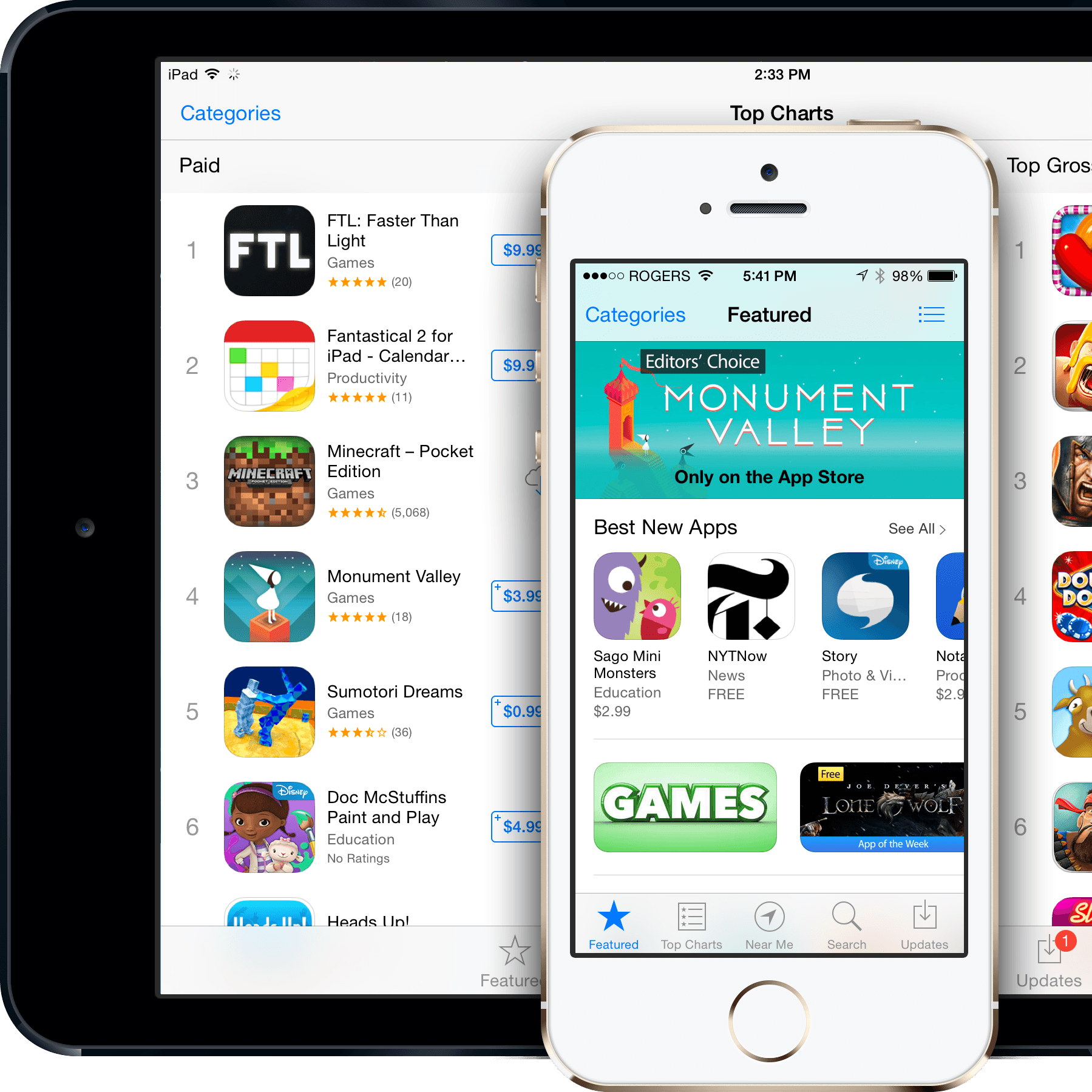
Games are apps, but a very special kind of app. They're iPhone, iPod touch, iPad, and Mac apps for fun. There are action and adventure games, arcade and board games, card and casino games, educational and family games, music and puzzle games, racing and role playing games, simulation and strategy games, sports and trivia games, and word and puzzle games. In short, there are games for every break and every binge, ever taste and every talent.

Read More »

Apps

0 comments
Once you start up your iPhone, iPod touch, iPad, or Mac, unless you just want to sit there and stare at the screen, you're going to want to launch some apps. Apple provides dozens built-in apps to handle all the basics. The App Store provides over a million more. There are games, of course, to have fun, but there are also apps for business and education, entertainment and finance, food and drink, music and lifestyle, health and fitness, kids, news and magazines, photo and video, productivity, social networking and messaging, travel and utilities, sports and weather, and much, much more.

Read More »

The Best

0 comments
What are the right iPhones, iPods, iPads, and Macs to own? What are the apps and games that simply have to be downloaded right now? What are the accessories that everyone really must have? Whether it's your first day or you're any day — What's the absolute best? These!

Read More »

How to

0 comments
The iPhone, iPad, iPod touch, and Mac are among the easiest to use computing devices on the planet. Everyone has a first time using them, however, or using one of their features. And even experts in iOS or OS X have family, friends, neighbors, and colleagues who are just picking them up. That's where iMore comes in. Whether it's your first day with a new device or a new app, or you simply need a link to email to someone you know or love, here's everything you — or they! — need to know!

How to use iOS for iPhone, iPod touch, or iPad


Read More »

Mac

0 comments
In 1984 Apple changed the world when it introduce the first Macintosh, a compact computer in an all-in-one beige box with an attached black and white display. Billed as "the computer for the rest of us," the Macintosh introduced the general public to the graphical user interface and the mouse.
Over the years the Mac's popularity has waxed and waned and waxed again. In the late 1990s Apple hit its stride again with the iMac, then moved its operating system forward to the modern age with OS X in 2000. Since then it's been going gangbusters: the Mac continues to sell very well, in fact selling better than the PC, outpacing PC sales quarter to quarter, consecutively, for years. The Mac has been slowly inching up its marketshare as more and more customers who buy iPods, iPhones and iPads decide they've had enough with their PC compatible computers and want a Mac.
Apple divides the Macintosh up into two proximate families: laptops and desktops. The laptop line includes the ultra-light, ultra-portable MacBook Air and the more powerfulMacBook Pro, both with and without Retina display — the first Mac to have such a screen.
The desktop line includes the tiny Mac mini, a versatile little machine that's equally suited for entry-level use, first time Windows switchers, media mavens looking for a home theater PC and businesses looking for a workgroup server.
Then there's the elegant and slim iMac, Apple's famed all-in-one, now one of Apple's fastest computers, equipped with quad-core processors and optional fast Fusion drives that combine SSD and conventional hard disk for maximum performance and capacity.
Rounding out the Mac line is the immensely powerful Mac Pro. Despite its tiny size - one-eighth the volume of its predecessor - the Mac Pro is a powerful workstation-class computer, designed from the ground up to run as fast as it possibly can, with up to a twelve-core processor, twin workstation-class GPU cards, and an all-solid state storage architecture that has twice the bandwidth of older systems.
All new Macs currently run OS X 10.9 Mavericks.
Regardless of whether you need portability or power, a tiny workstation or a giant graphical behemoth, Apple has a Macintosh model that suits your needs.

Read More »

iPad

0 comments
The original iPad was an iPhone gone IMAX and the first successful tablet the world had ever seen. The iPad 2 made it thinner, lighter, and faster. The iPad 3 went Retina and LTE but not comfortably so. The iPad 4 made Retina and LTE sing. And the iPad mini showed portability could be just as important as power. Now the Retina iPad mini is as high-density as they come, and the iPad Air has gone light as its namesake. Where does the future lie? With Touch ID, certainly, and maybe even with... and iPad Pro?
Read More »

iPhone

0 comments
Apple introduced the original iPhone back in 2007, instantly obsoleting every other smartphone on the planet. The iPhone 3G and iPhone 3GS, Apple lowered prices an mainstreamed mobile. The iPhone 4 and iPhone 4s took the world to Retina and Siri. TheiPhone 5 got taller and LTE faster. And now the iPhone 5s and iPhone 5c put the future at our fingertips, today. What's next for Apple? Likely two new iPhones for 2014, including a continuation of the existing 4-inch line, and an all-new up to 5-inch iPhone 6.

Read More »